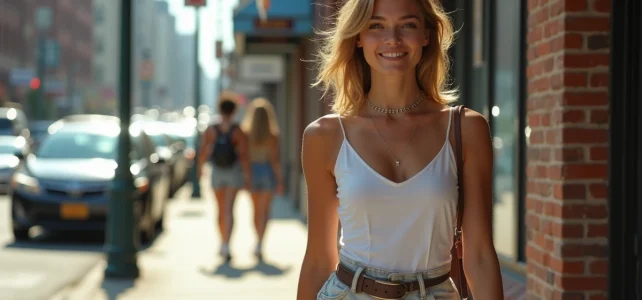
4.2%. This is the growth displayed by the textile market in 1996. It’s not just a number: it’s a witness to a time that is accelerating, fueled by the meteoric rise of fast fashion and the impact of music channels on the small screen. That year, alliances between sports giants and renowned designers are no longer exceptions: they blur the lines between jogging and tailored suits, between pavement and red carpet.
Styles that had long been marginalized suddenly find their way into mainstream windows. The codes of yesterday explode, the street infiltrates the runways. This mix of freedom and boldness leaves its mark on an entire generation, and it only takes opening any current lookbook to find its traces.
Why 1996 remains a pivotal year for 90s fashion
It’s impossible to talk about 1996 without mentioning the shock it provoked behind the scenes of fashion. Paris, Milan, New York: the runways take on the appearance of a manifesto. Tom Ford propels Gucci into orbit, John Galliano and Alexander McQueen shake the foundations, and minds heat up in the front rows. The newcomers inject a breath of fresh air, challenging what was thought to be fixed: the silhouette, the materials, even the relationship with the body and clothing.
Calvin Klein writes sobriety, Mugler and Gaultier respond with excess, provocation, and staging. The result: a wardrobe that is both sensual and relaxed, where every detail matters. Models become global references, like Kate Moss, Naomi Campbell, Claudia Schiffer, or Linda Evangelista. Their faces are everywhere, from the subway to billboards, imposing a vision of style where pop culture mingles with haute couture.
Let’s look at Tom Ford’s effect on Gucci: dark velvet, shirts that reveal skin, flashy jewelry, the recipe charms both the street and upscale circles. French designers, on the other hand, inject more flexibility, responding to the appetite for novelty of a youth that no longer wants to choose between elegance and nonchalance.
Consulting the fashion trends of 1996 is to dive into this effervescence: bold hybridizations, returns of revisited classics, affirmation of a strong identity. Fashion no longer follows the rhythm; it dictates it, and this rhythm continues to resonate in today’s collections.
What iconic trends marked 1996 and how to recognize them today?
The DNA of 1996 is the sharp silhouette, the pure line, the balance between nonchalance and precision. Minimalism triumphs under the aegis of Calvin Klein: straight dresses, sober colors, soft materials. Oversized jackets and low-rise pants define the androgynous look, omnipresent from Paris to London.
In this effervescence, Tom Ford imposes his style at Gucci: black velvet, open satin shirts, golden touches, a sensuality that has never really faded. Gaultier and Mugler push boldness further, juggling between revisited corsets and suggestive transparencies. Meanwhile, the straight jean, worn by both Kate Moss and Carolyn Bessette Kennedy, becomes a staple, equally legitimate on the cobblestones as on the red carpets.
Here are some key codes that emerge:
- The return of the little black dress, minimalist version, without frills and tailored to the millimeter.
- The reign of the straight jean, crossing social classes and borders, from everyday wear to the most high-profile evenings.
- The dominance of neutral colors, from powdery beige to steel gray, omnipresent in collections as well as on the street.
The great figures of fashion, with Linda Evangelista or Naomi Campbell at the forefront, embody these trends. Paris Fashion Week, a true laboratory of ideas, imposes its choices, and the influence of this era settles permanently in today’s wardrobe.
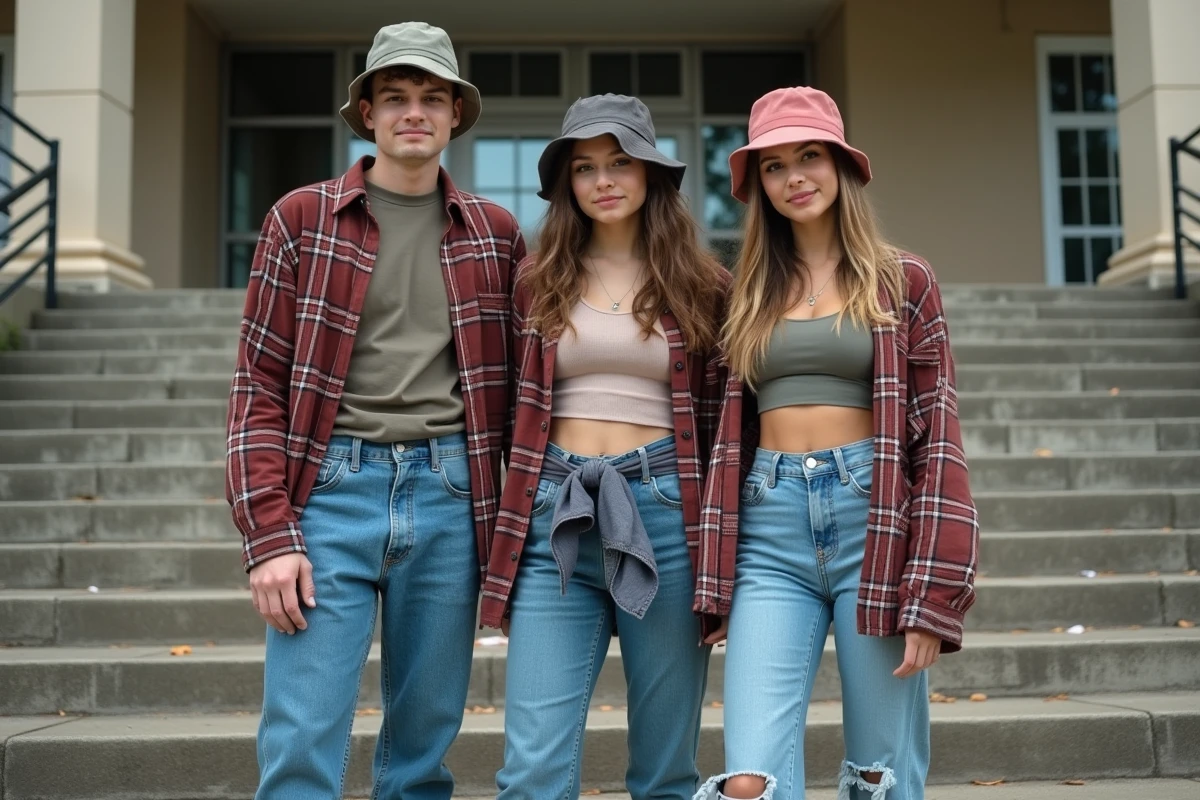
From runways to streets: the lasting influence of nineties style in contemporary fashion
The shockwave of 1996 has never dissipated. On the contrary: it irrigates contemporary creation, transcends seasons, and appears unapologetically on the runways of Paris Fashion Week. Rather than settling for a distant homage, today’s designers reinterpret the icons of the era: bold jackets, pure materials, the omnipresence of straight jeans or oversized blazers, everything recalls the energy of that time.
On Instagram or in the bustling streets of Paris and New York, a new generation appropriates these codes, balancing nostalgia and reinvention. Current fashion week proves it: low-rise pants, minimalist dresses, long trench coats, all key pieces that appeal to both rookies and established figures. Neutral tones, a signature of Calvin Klein, structure the new collections, while the Gucci spirit shaped by Tom Ford resurfaces in the choice of materials and the taste for uniqueness.
Three trends, among others, are subtly inscribed:
- The fashion of 1996 has not evaporated: it has metamorphosed, integrated into the DNA of each generation.
- Today’s designers boldly revisit the nineties legacy, oscillating between nods and reinterpretations, from Paris to Milan.
- The androgynous silhouette, the free attitude, and the quest for authenticity continue to mark the international fashion scene.
This constant back-and-forth between archives and newness is the best proof that fashion never goes in circles. The 90s remain a vibrant source of inspiration, a playground where each season refreshes the collective memory. Who knows: the next stylistic revolution may be lurking in a wardrobe inherited from 1996.