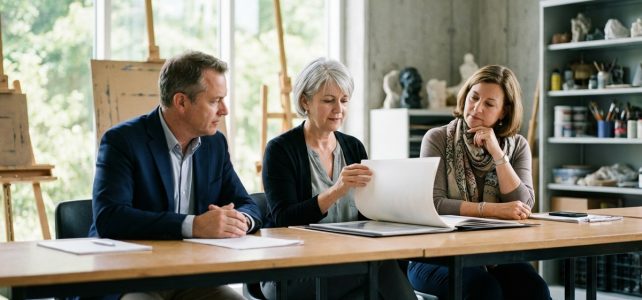
No portfolio looks like another, but some details still escape most candidates. The absence of a linear path does not prevent juries from identifying thoughtful choices, sometimes contrary to assumed expectations.
The criteria evolve each year, while elements previously considered secondary suddenly gain importance. Interviews no longer aim solely to confirm skills but to uncover adaptability and genuine curiosity, far from formatted responses.
What has really changed in the admission criteria of art schools
In the past, art school juries in France focused on technique, academic know-how, and solid foundations. That time is rapidly fading. Today, it is impossible to convince without a strong personal approach. The originality of the journey takes center stage, without dismissing the requirement for technical mastery. Whether in Paris, Lyon, or Strasbourg, those reviewing the applications want to sense a complete personality, capable of weaving a connection between artistic practices and contemporary issues. What captures attention? A way of deconstructing codes, anchoring one’s approach in a lively reflection on the role of art.
The diversity of experiences also plays a decisive role, on par with drawing or visual arts skills. Art schools no longer settle for a mere alignment of techniques: they expect you to give meaning to your choices, articulate your references, and present a thought in motion. In Reims or Nantes, a convincing portfolio tells a story, embraces a personal vision, and reexamines the very definition of an artistic dossier.
The coherence between the discourse, the portfolio, and the works captures the juries’ attention. Take the example of the admission process at ESMA: here, what matters is the ability to demonstrate adaptability, to engage in dialogue, to question one’s acquired knowledge without falling into an artificial posture.
Certain criteria consistently emerge in the juries’ discussions:
- Coherence of the journey: connecting works, influences, and professional projects.
- Analytical ability: putting one’s practice into perspective within art history and current issues.
- Openness and curiosity: showing an interest in various artistic forms, from design to video.
Selection moves away from a simple academic exercise. Art schools, attentive to the transformations in the sector, favor profiles that know how to take risks, reflect, and engage in a collective energy.
Should one focus on technique, personality, or originality?
In the hushed corridors of art schools, the question persists: how much weight should be given to technique, personality, or originality? The juries dissect each application, each gesture. The skills acquired in drawing, painting, or sculpture remain scrutinized; mastery of techniques does not disappear from the radar. However, artistic practice is no longer reduced to a succession of learned gestures.
Jury members expect an articulated approach, capable of linking creativity and critical thinking. A portfolio, no matter how brilliant, must reveal an identity. An artist who merely imitates, even with virtuosity, leaves a taste of incompleteness. In contrast, one who asserts their viewpoint, embraces risk, attracts attention. Mixed profiles are particularly appealing: students from preparatory classes, self-taught individuals, candidates from external artistic activities, all bring their share of surprises.
In interviews, the uniqueness of the journey is expressed as much in words as in images. Presenting one’s works is about defending a vision, not just a know-how. Schools are not looking for executors, but thinkers capable of opening perspectives and challenging the codes of art magazines or academic drawing. The juries seek this fragile balance: a solid artistic practice, driven by a singular intention, and permeated by a desire for dialogue with the times. The portfolio, like the interview, then becomes the place for an authentic confrontation between art and the world.
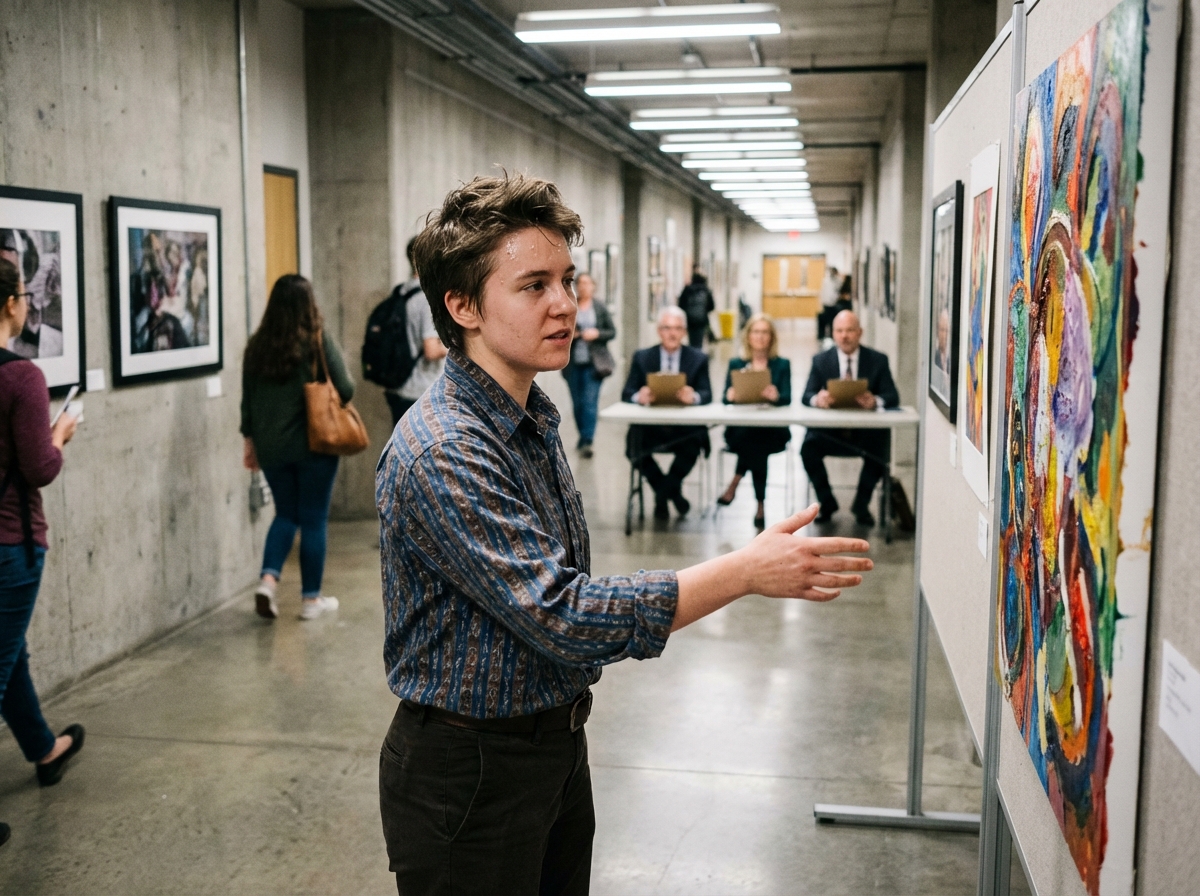
Preparing your portfolio and interview: practical tips to stand out
On the benches of the art school competitions, excitement takes over: portfolios clash, sketchbooks circulate, candidates hold their breath. This suspended moment precedes the presentation of the artistic dossier, a decisive step where everything is at stake. A portfolio is not limited to a gallery of finished works. The juries want to grasp the logic that connects each creation, understand the approach, the hesitations, the explorations. It is beneficial to show unfinished works, sketches, experiments: they reveal the evolution of practice, not just the result.
The motivation letter and the artistic CV are more than a formality: they tell a story. Mention workshops, internships, projects undertaken, even outside the beaten path. The juries look for traces of a personal journey, a chronology where each experience nourishes the artistic discourse. Specializations in applied arts, visual arts, design, animation, or photography strengthen the dossier as long as they integrate into a clearly defined project.
In the oral presentation, adopting a reflective posture makes a difference. Presenting one’s works also means exposing intentions, influences, and technical choices. Being able to question one’s approach, situate one’s work within an art history or current artistic context weighs heavily in the jury’s evaluation. Prepare to defend your choices, to answer honestly to questions about the meaning and choices of your portfolio: this is where the line is drawn between applied execution and creative engagement.
Ultimately, entering an art school no longer depends on a recipe. What juries scrutinize first is the ability to tell one’s story, to make technique and vision converse, to situate one’s project within the ever-changing reality of creation. It remains for each individual to build a living, sincere dossier, and to dare to take a stand. Because, in the arena of art schools, it is always the boldness and honesty of perspective that make the difference.