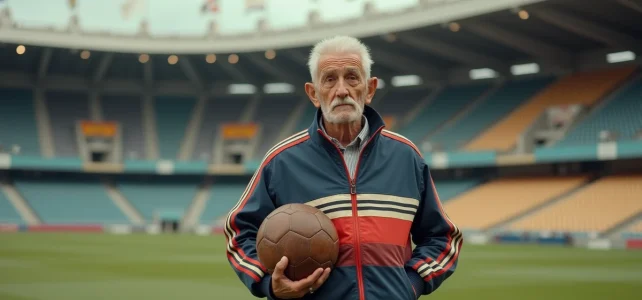
Some champions systematically refuse to publish their autobiography until their career is over. Others impose clauses to censor entire episodes of their journey. However, a few narratives escape these rules and offer unprecedented access to the intimacy and dilemmas of high-level competition.
Specialized publishing houses compete for the rights to these works, aware of their appeal well beyond sports circles. Sales of these biographies sometimes surpass those of bestselling novels, revealing the lasting impact of these testimonies on generations of readers.
Why the stories of athletes fascinate and inspire generations
The tales of the greatest legends in global sports cross borders, span decades, and continue to nourish the collective imagination. Failure is merely a step, success is not eternal. Take Michael Jordan: six NBA rings, an insatiable appetite, a capacity to come back stronger after every setback. This is no longer just a record, but a story shaped by demands, rivalry, pain, and perseverance.
In these champions, resilience is present on every page. Jesse Owens brandishes four gold medals in Berlin in 1936, defying a regime in front of the whole world. Usain Bolt and Rafael Nadal turn every victory into a declaration of identity, every defeat into an opportunity to grow. Their stories do not just impress: they are etched in collective memory, fueling the debate on excellence and conveying values that transcend the realm of sports.
France is no exception. From the history of winter resorts to the saga of CSP Limoges, the French sports landscape is overflowing with symbols and achievements. One only needs to remember the victory of FC Metz against Barça in 1984, or the unexpected triumph of Leicester City to grasp the impact of these moments. Biographies, documentaries, and comics, like the one dedicated to Antoine Dupont, offer everyone the chance to discover the legends of sports, to measure their influence, and to pass this spirit on to those who will come after.
Here’s what these stories highlight:
- Self-overcoming: the driving force behind every exceptional career
- Universal values: brotherhood, courage, commitment
- Transmission: inspiration, the intangible heritage of sports
What essential biographies and autobiographies to discover the legends of sports
Sports biographies and sports autobiographies outline the intimate map of champions. They reveal the behind-the-scenes of high-level competition, the doubts, and the mental strength. Michael Jordan has bluntly stated what it means to live up to his myth, between dizzying ascents and constant pressure. Memories of Johan Cruyff traces the journey of a football genius, player then coach, whose influence still shapes the game today.
Some strong examples testify to the diversity of these narratives:
- Alex Honnold pushes the limits of the possible: Free Solo dives into the heart of the ropeless ascent of El Capitan, a face-to-face with fear and extreme concentration.
- The stories of Tony Hawk and Terje Håkonsen, pioneers of skateboarding and snowboarding, recount the birth of an alternative culture, on the fringes of conventional sports.
- Teddy Riner, Sébastien Loeb, or Tony Estanguet open up to the raw reality of high-level competition: physical demands, pressure management, invisible sacrifices behind every victory.
The pages dedicated to Miguel Indurain Larraya, five consecutive Tours de France, or Michael Phelps and his 28 Olympic medals, illustrate what it means to constantly push one’s own limits. Antoine Dupont embodies the new generation: his trajectory, told in comic form, reaches a broad, young, and less initiated audience.
Each portrait, each testimony, sheds light on what high-level sports entail: solitude, doubt, stubbornness. Through these narratives, readers access the truth of the champion, far from the spotlight and podiums.
Diving into remarkable narratives: extraordinary journeys through sports literature
Sports narratives strike with their sincerity: they show fragility and greatness, the feats that build collective memory. The adventure of Leicester City in 2016, led by Claudio Ranieri, Jamie Vardy, Riyad Mahrez, or N’Golo Kanté, defied all predictions. This club, destined for relegation, upended the established order and rose to the status of sports legend in the Premier League.
Sports literature also opens the door to other epic tales. The historic comeback of the Cleveland Cavaliers in the 2016 NBA Finals, led by Tyronn Lue, LeBron James, and Kyrie Irving, offered an entire city an unexpected title. Alongside these collective feats, there are individual moments that mark forever: Jesse Owens in Berlin, Michael Johnson shattering records in Atlanta, or Robin Söderling breaking Rafael Nadal’s winning streak at Roland-Garros.
Sports literature also highlights the power of the group. The success of FC Metz against Barça in 1984 or that of CSP Limoges, European champion in 1993, shows that determination can move mountains. Through these narratives, we better understand what drives the greatest legends of global sports: resilience, self-overcoming, that inner strength that can change a destiny. It is impossible to close these pages without feeling, deep down, the desire to believe in the improbable.