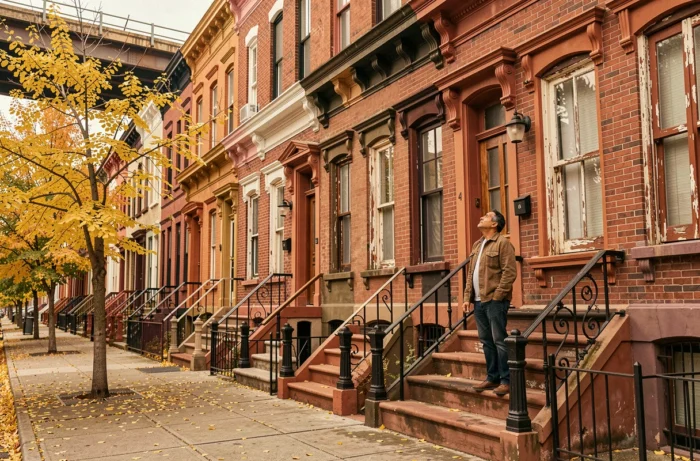
The Bronx encompasses several architectural layers that Manhattan has often erased under real estate pressure. From Beaux-Arts style to the brutalism of the 1960s, including Art Deco movie palaces, the northern borough of New York retains buildings whose heritage density remains less documented compared to that of Brooklyn or Queens. Measuring the extent of this heritage first involves comparing ongoing restoration projects and the budgets allocated to them.
Restoration Projects in the Bronx: Compared Budgets and Timelines
Several heritage construction sites are simultaneously unfolding in the borough. Their financial scope gives an idea of the architectural value that institutions and communities attribute to these buildings.
| Project | Budget | Expected Deadline | Nature of Work |
|---|---|---|---|
| Bronx Museum of the Arts (Marvel agency) | 43 million dollars | Fall 2027 | New glass façade, geometric roof, reconfiguration of the lobby and circulation |
| Loew’s Paradise Theatre (Grand Concourse) | Not disclosed | Inaugural season 2026 | Restoration of the atmospheric ceiling, historical signage, rooftop stage |
| HEArts Center (former Lincoln Recovery Center, Mott Haven) | Not disclosed | Ongoing | Conversion into a community center dedicated to health, arts, and employment |
The Bronx Museum of the Arts represents the most significant project. The Marvel agency has been working on it since 2024, and the museum remains open throughout the construction period. The new glass façade and redesigned roof aim to strengthen the relationship between the building and the street, a departure from the former recessed entrance.
To delve deeper into the architectural heritage of the Bronx and its characteristic styles, one must look back to the decades that shaped the Grand Concourse and its Art Deco residential buildings.
The Loew’s Paradise Theatre: Anatomy of an Art Deco Movie Palace on the Grand Concourse
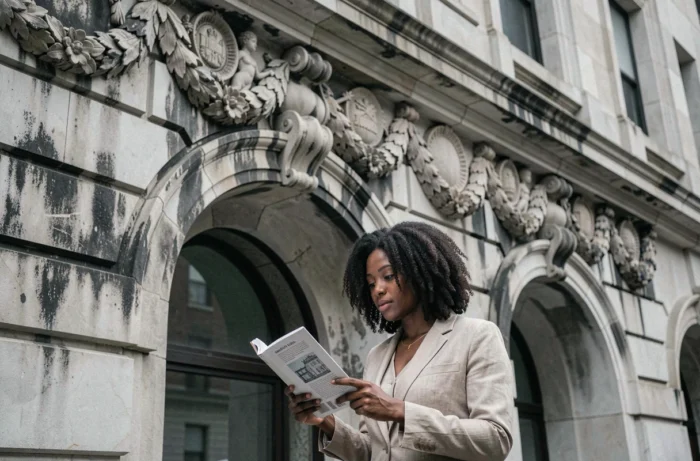
Designed in 1929 by architect John Eberson, the Loew’s Paradise Theatre holds a unique place in the history of American performance venues. Its atmospheric ceiling, replicating a starry sky with moving clouds, distinguishes it from classic cinemas with gilded moldings.
The building has undergone decades of successive uses, including subdivision of the auditorium and prolonged closure. Each stage has left marks on the structure, but the original decorative elements have largely survived.
What the Restoration of the Paradise Entails
The transformation project into the Paradise Performing Arts Center is not limited to cosmetic rehabilitation. The work includes restoring the historical exterior signage, refurbishing the period seats, and creating a rooftop stage. The inaugural season is announced for 2026.
The stakes go beyond mere conservation. The Grand Concourse, the central artery of the Bronx, features a lineup of Art Deco residential buildings constructed in the 1920s and 1930s. Restoring the Paradise means re-anchoring a public building within an urban fabric whose stylistic coherence remains remarkable.
Bronx Museum of the Arts: An Architectural Transformation Redefining the Relationship to the Street
The $43 million project entrusted to Marvel agency profoundly alters the visual identity of the museum. The former entrance, barely visible from the sidewalk, gives way to a glass façade that exposes the interior spaces to passersby.
This approach aligns with a trend observed in several New York museums in recent years: opening cultural institutions to their neighborhoods rather than designing them as closed enclaves. In contrast, the Bronx Museum presents a logistical peculiarity: the museum remains open throughout the construction period, necessitating a complex phasing of interventions on the structure.
Glass Façade and Geometric Roof: Marvel’s Choices
The redesigned geometric roof aims to enhance the building’s urban presence. The reconfigured lobby offers new interior circulation that should facilitate visitor flow between galleries.
- New entrance directly onto the Grand Concourse, with visual transparency between interior and exterior
- Reorganization of circulation to streamline the visitor experience and eliminate blind spots
- Maintaining museum activity during construction, with partial closures by successive zones
The full reopening is scheduled for fall 2027. The timeline gap with the Paradise Theatre (2026) means that the Grand Concourse will witness two major heritage inaugurations within two years.
Mott Haven and the South Bronx: Conversion of a Public Facility into a Community Center
The Mott Haven neighborhood, in the southern part of the borough, is developing a different model of architectural preservation. The former Lincoln Recovery Center, an unused public building, will house the HEArts Center, dedicated to health, education, arts, and employment.
This project illustrates a logic of heritage conversion driven by local communities rather than cultural institutions or developers. The building retains its original envelope while receiving an entirely new programming.
The approach differs from that of the Bronx Museum or the Paradise Theatre in one structural aspect: it is not about restoring a building for its aesthetic value, but about reactivating a place through its use. The heritage value here arises from the building’s social history, not from its ornaments.
- Planned programs: artistic workshops, health services, employment support
- Local appropriation approach, without intervention from a renowned architectural firm
- Located in a neighborhood where real estate pressure has been intensifying for several years
Thus, the south Bronx concentrates two parallel dynamics: real estate speculation and community resistance through the conversion of existing facilities. The HEArts Center embodies this tension.
Two heritage inaugurations are planned by 2027 on the Grand Concourse, a community center in the making in Mott Haven: the Bronx is entering a phase where its most neglected buildings are becoming issues of urban development. The combined budget of the documented projects far exceeds the usual cultural investments of the borough, indicating that the architectural recognition of the Bronx is no longer just a matter of discourse but of financial decisions.