
Daily watering often does more harm than good, even during hot periods. Mowing the grass too short encourages the proliferation of weeds instead of strengthening the lawn. Some fertilizers, although recommended, disrupt the soil’s balance if applied at the wrong time.
Plant growth never completely stops, even in winter, and dormancy does not exclude specific needs. Traditional maintenance methods, passed down from generation to generation, sometimes overlook recent techniques that simplify the management of green spaces throughout the year.
The basics of a thriving garden all year round: what you need to know
A garden is not just a rectangle of lawn or a few pots lined up on a terrace. It lives, it breathes, and above all, it organizes itself into a multitude of areas that require careful attention: vegetable garden, lawn, ornamental plants, fruit trees, terraces, balconies… each demands its own care. At the heart of this diversity, the soil plays a leading role. Its vitality is the strength of the garden. Taking the time to observe it, adding compost, or covering it with mulch is an investment in a solid ecosystem. Mulching preserves moisture, slows the growth of unwanted plants, moderates temperature, and protects microorganisms. Compost, the result of patient work on organic waste, enriches the soil and nourishes underground life.
Water, for its part, should not be wasted. Forget blind watering: it’s better to target and time each supply according to the specific needs of your plants. Installing a drip irrigation system or collecting rainwater are habits to adopt. For the lawn, regular maintenance is essential: balanced mowing, occasional aeration, and no scalping. Flower beds thrive with thoughtful crop rotation and patient weeding. As for the vegetable garden, varying species and alternating varieties give the soil a chance to regenerate.
Exposure changes everything: shade invites robust perennials, while sun favors vegetables and herbs. Even small spaces, terraces, and balconies have their say. They become true laboratories for those seeking garden advice or looking to draw inspiration from Green Space: our tips for amateur gardeners – Jardiniers info.
It’s impossible to neglect tools. They should be chosen based on their use, whether for pruning, aerating, or weeding, and above all, they should be maintained rigorously. A well-sharpened pruner, a clean spade, and you have the promise of precise, effective, regular actions that make a difference in the long run.
What actions to adopt in each season for effective maintenance?
The garden dictates its rhythm throughout the year. Each season imposes its list of priority tasks, its urgencies, its specific actions. When spring arrives, the sap rises, and the garden calls for a refresh: shrubs are pruned, flower beds are cleaned, and the last leaves are collected. It’s time for sowing in the vegetable garden, planting perennials, and staying vigilant against diseases or pests that may appear. A persistent weeding is necessary to prevent unwanted plants from establishing themselves permanently. Rotating crops preserves soil richness and limits risks.
In summer, drought looms. Watering is organized early in the morning or in the evening, with targeted application at the base of plants to limit evaporation. Mulching keeps the soil cool and protects roots, while slugs and other visitors sometimes invite themselves. The lawn should never be scalped: regular but moderate cutting ensures its vigor. Faded flowers are cut back to encourage blooming, giving rhythm to the garden.
Autumn marks the time for planting trees and shrubs. The soil, still warm, encourages recovery. Leaf collection, composting, and lawn aeration are on the agenda. Hedges are pruned outside of nesting season, and fragile plants are protected to prepare them for the first cold spells.
In winter, it’s time for observation and preparation. Work becomes rare, but every action counts: sharpening tools, planning crops, enriching compost. Check protections against frost. This apparent time of silence conditions the success of the following spring and ensures the health of your garden in the long term.
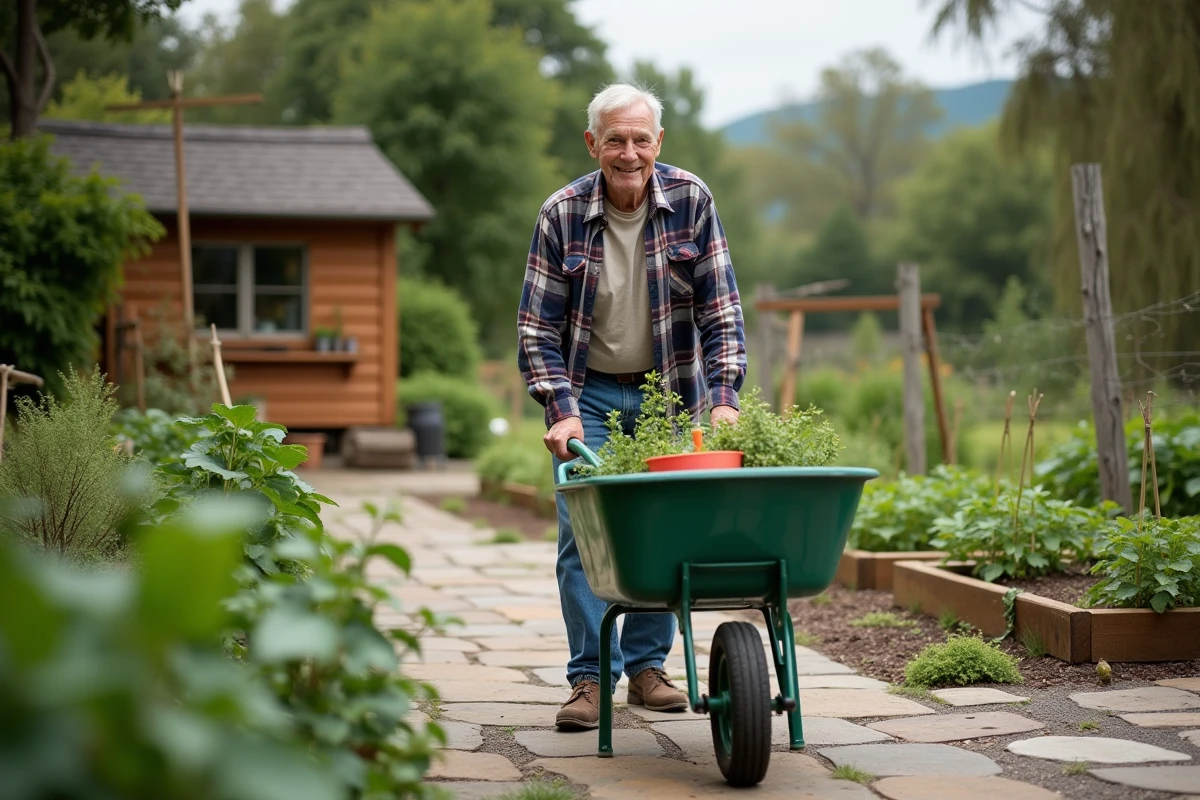
Simple tips and clever ideas to facilitate daily maintenance
To gain efficiency without sacrificing pleasure, a little organization and logic are all it takes. Perennial plants or ground covers prove to be valuable allies: they limit weeding sessions, structure the space, and reliably bloom each year. In the vegetable garden, focusing on companion plants brings real benefits: tomatoes thrive next to basil, and carrots and onions get along well. These associations naturally reduce pest pressure and avoid the need for chemical treatments.
Water management also deserves consideration. Well-placed mulch on flower beds and in the vegetable garden retains moisture and lightens the watering chore. Collecting rainwater with a simple collector allows for stress-free watering all summer long. For fertilization, homemade compost from kitchen waste energizes the soil and encourages biodiversity. Within reach, it becomes a reflex in regular maintenance.
Here are some simple levers to maintain your garden without unnecessary effort:
- Attract microfauna by installing an insect hotel or simply creating wood piles: ladybugs and ground beetles will help regulate aphids and slugs.
- Consider protecting your paths with a geotextile fabric under gravel: unwanted weeds will have a hard time establishing themselves.
- Opt for natural pesticides, such as nettle manure or black soap, to preserve the vitality and biological balance of your garden.
Testing permaculture in a corner of the garden opens you up to a different way of cultivating: permanent mulching, adapted varieties, thoughtful rotation. The result? Less hassle, more life, and a space that rewards you season after season.
With patience, curiosity, and informed choices, gardening becomes an endless playground. Each season brings surprises, and each action has its impact: the garden, true to its promises, transforms and grows with you.